How to Choose the Best Custom Flip Top Boxes for Your Products

Why Choosing the Best Custom Flip Top Boxes Can Make or Break Your Brand
Knowing how to choose the best custom flip top boxes for your products can be the difference between packaging that sells and packaging that gets ignored.
Here’s a quick answer to help you decide:
How to Choose the Best Custom Flip Top Boxes — At a Glance:
- Match material to product — Use rigid board for luxury items, kraft for eco-conscious brands, corrugated for shipping
- Pick the right closure — Magnetic closures add a premium feel; friction or tuck-in tabs work for budget-friendly options
- Choose your size carefully — Measure your product’s length, width, and height, then add space for inserts
- Select finishes that fit your brand — Matte, gloss, spot UV, foil stamping, or soft-touch lamination
- Plan for MOQ and lead time — Most suppliers require 100 units minimum with 8–12 business day turnaround
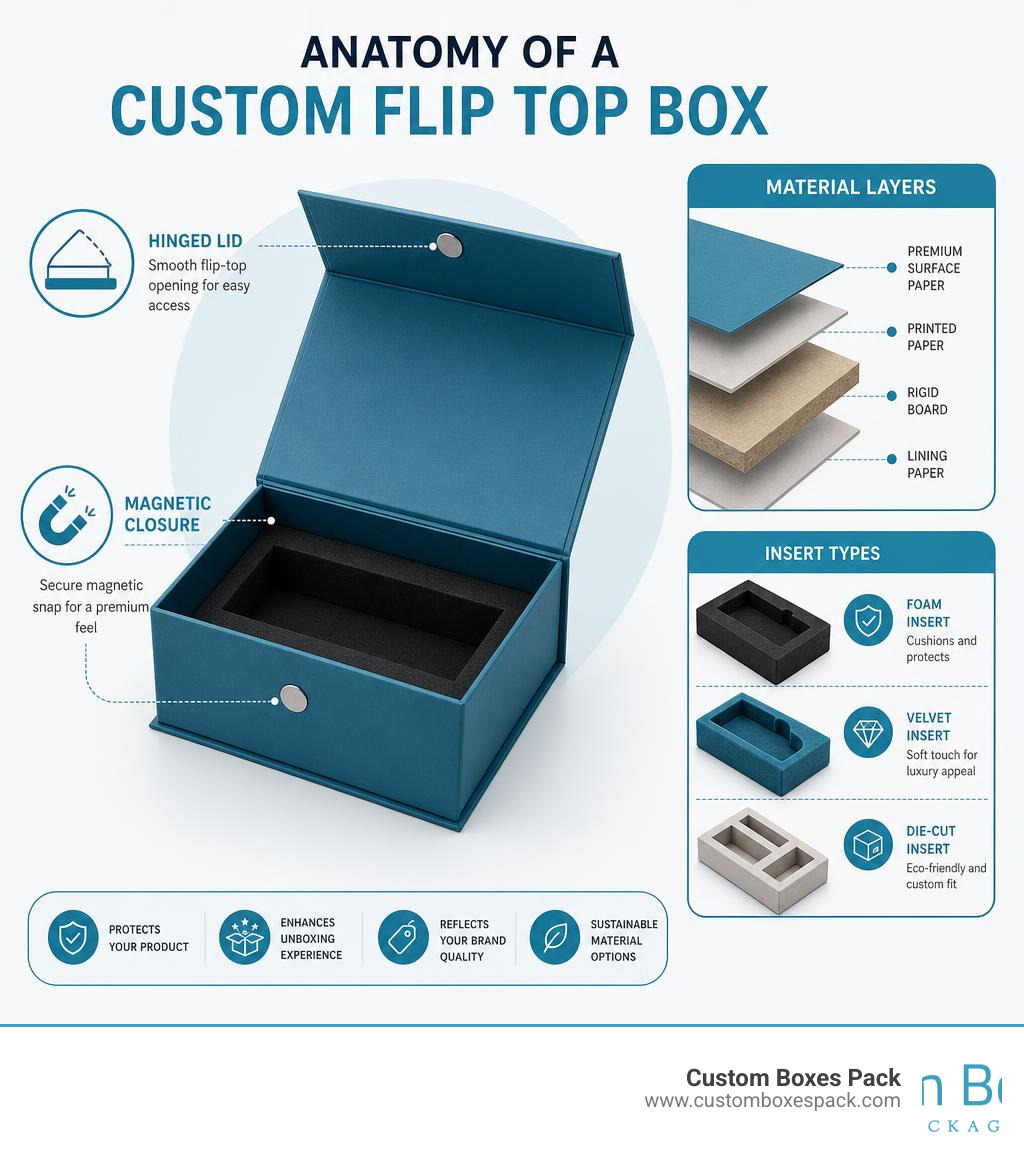
- Add functional inserts — Foam, velvet, or die-cut cardboard inserts protect products and improve presentation
- Consider sustainability — Recyclable kraft or FSC-certified cardboard with soy-based inks appeals to 67% of eco-conscious shoppers
Packaging does more than protect a product. It shapes how customers feel about your brand the moment they pick it up. In June 2026, with unboxing videos driving purchase decisions and social sharing influencing brand reach, your box is often your first — and most powerful — impression.
Consider what Lindt achieved with seasonal flip top packaging: a 17% sales increase simply by adding gold foil and embossed snowflake designs. That’s not a coincidence. That’s packaging working as a marketing tool.
Custom flip top boxes — with their hinged lids, satisfying magnetic snap, and endless finish options — have become one of the most versatile packaging formats across cosmetics, jewelry, electronics, and gifting. But with so many materials, closures, sizes, and suppliers available, choosing the right one for your specific product can feel overwhelming.
That’s exactly what this guide is here to fix.
I’m Adam John, a backlinking and packaging content expert who has spent years studying what makes custom packaging work — including how to choose the best custom flip top boxes for your products across industries from beauty to electronics. In this guide, I’ll walk you through every decision point so you can order with confidence.
How to Choose the Best Custom Flip Top Boxes for Your Products basics:
- Bulk Custom Magnetic Boxes With Logo Packaging
- How Collapsible Rigid Packaging Rescued US D2C Brands From Sky-High Warehousing Rents
- How Sourcing Domestic Custom Boxes Saves Shipping Time
What Are Custom Flip Top Boxes and How Do They Differ from Rigid Boxes?
To understand how to choose the best style, we first need to define what a flip top box actually is. Also known as clamshell or hinged-lid boxes, custom flip top boxes feature a permanently attached lid that rolls over the main body of the box. Unlike traditional two-piece boxes where the lid detaches completely, a flip top box provides a guided, cohesive opening experience. The lid stays anchored, acting as a stage for your product when opened.
Many brands confuse custom flip top boxes with traditional rigid setup boxes. While they can look identical when closed, their structural engineering, shipping state, and cost profiles are completely different.
Flip top boxes can be manufactured using high-density paperboard, cardboard, or corrugated e-flute. Crucially, many styles of flip top boxes can be shipped flat (knocked down) and assembled easily at your fulfillment center. Rigid boxes, on the other hand, are shipped fully pre-assembled. This difference has massive implications for your shipping and storage budgets.
Here is how they compare at a glance:
| Feature | Custom Flip Top Boxes | Traditional Rigid Boxes |
|---|---|---|
| Lid Attachment | Hinged (permanently attached) | Fully detachable (two-piece) |
| Shipping State | Can ship flat (knocked down) or pre-assembled | Ships fully pre-assembled |
| Storage Space | Low (up to 500 units fit on one pallet) | High (500 units can take up to 5 pallets) |
| Dimensional Weight | Low shipping costs due to flat-pack options | High shipping costs due to empty air volume |
| Hinge Durability | Built to bend; can be reinforced with cloth | Rigid edges; no moving parts |
| Aesthetic Appeal | Sleek, modern, and highly interactive | Classic, heavy, ultra-luxury |
By choosing a flip top design, you retain the premium look of a high-end box while drastically reducing your overhead costs. Designing these boxes correctly is essential for grabbing attention in competitive retail settings. To learn more about tailoring your designs for maximum shelf appeal, see our guide on Designing Flip Top Boxes to Capture US Consumer Attention.
Choosing the right structure is the foundation of your packaging strategy. If you are still weighing your options, take a look at this resource on How to Choose the Best Box Style for Your Product | NextDayFlyers to see how different box styles perform under different retail conditions.
Key Industries Benefiting from Flip Top Packaging
Due to their versatility and protective build, custom flip top boxes are highly favored across several key sectors:
- Cosmetics & Beauty: From eyeshadow palettes to premium skincare kits, the flat, presentation-style layout of a flip top box makes it perfect for displaying multiple items side-by-side.
- Jewelry & Luxury Goods: A rigid flip top box lined with velvet acts as a protective vault, keeping rings, necklaces, and watches safe while offering a dramatic opening moment.
- Electronics: Smartphones, wireless earbuds, and smartwatches benefit from the structured, high-tech feel of a flip top box with custom-cut compartments.
- Gourmet Food & Confectionery: Chocolatiers and specialty tea brands use themed flip top packaging to turn everyday treats into gift-worthy experiences.
- Subscription Boxes: The secure closure and structural integrity of corrugated flip top boxes ensure that monthly subscription items arrive in pristine condition.
If your business operates in the retail space, selecting a box that stands out on a shelf or on screen is paramount. Explore our specialized options for Custom Retail Boxes to find a style that fits your specific industry.
How to Choose the Best Custom Flip Top Boxes for Your Products: Material & Closure Selection
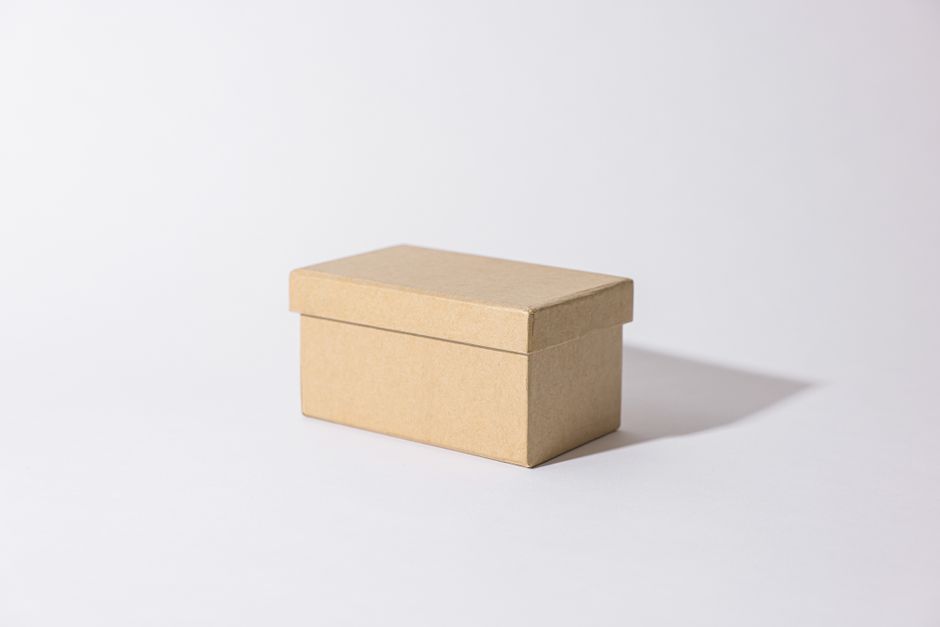
The material you choose determines your box’s durability, tactile feel, and overall cost. When figuring out how to choose the best custom flip top boxes for your products, matching the material to your product’s weight and delicacy is your first step.
Here are the four primary materials used in flip top box manufacturing:
- SBS Paperboard (Solid Bleached Sulfate): This is a clean, bright white paperboard ranging from 14pt to 24pt in thickness. It is highly foldable, lightweight, and offers a smooth surface that is perfect for high-resolution, vibrant printing. SBS is ideal for cosmetics, lightweight retail items, and pharmaceuticals.
- Kraft Paperboard: Made from natural wood fibers, eco-friendly kraft paperboard is highly durable and biodegradable. It gives your brand a rustic, organic, and honest look. It is perfect for natural skincare, organic foods, and eco-conscious lifestyle goods.
- Corrugated Fiberboard: Typically using thin, sturdy E-flute or B-flute, corrugated material provides excellent cushioning. It is the go-to choice for e-commerce shipping boxes, subscription packaging, and heavier retail items like candle jars or electronics.
- Rigid Board (Greyboard): Ranging from 1.5mm to 3mm in thickness, rigid board does not bend or collapse. It is wrapped in premium printed paper, textured linen, or velvet to create a heavy, ultra-luxury box. It is perfect for jewelry, high-end perfumes, and premium gifts.
For a deeper dive into choosing the right material thickness and structural strength, check out this guide on How to Choose the Best Custom Box for Your Product – UPrinting.
The Mechanics of Magnetic Closures and Sustainable Materials
One of the most popular features of a custom flip top box is the magnetic closure. But how does it work, and why do consumers love it so much?
Inside the front flap of the lid and the front wall of the box base, we embed small, high-grade magnets (typically N35 grade neodymium magnets). When the lid is closed, these magnets pull together, creating a secure seal and a satisfying, audible “snap.” This sensory feedback signals high quality and security to the consumer, elevating the perceived value of the product inside.
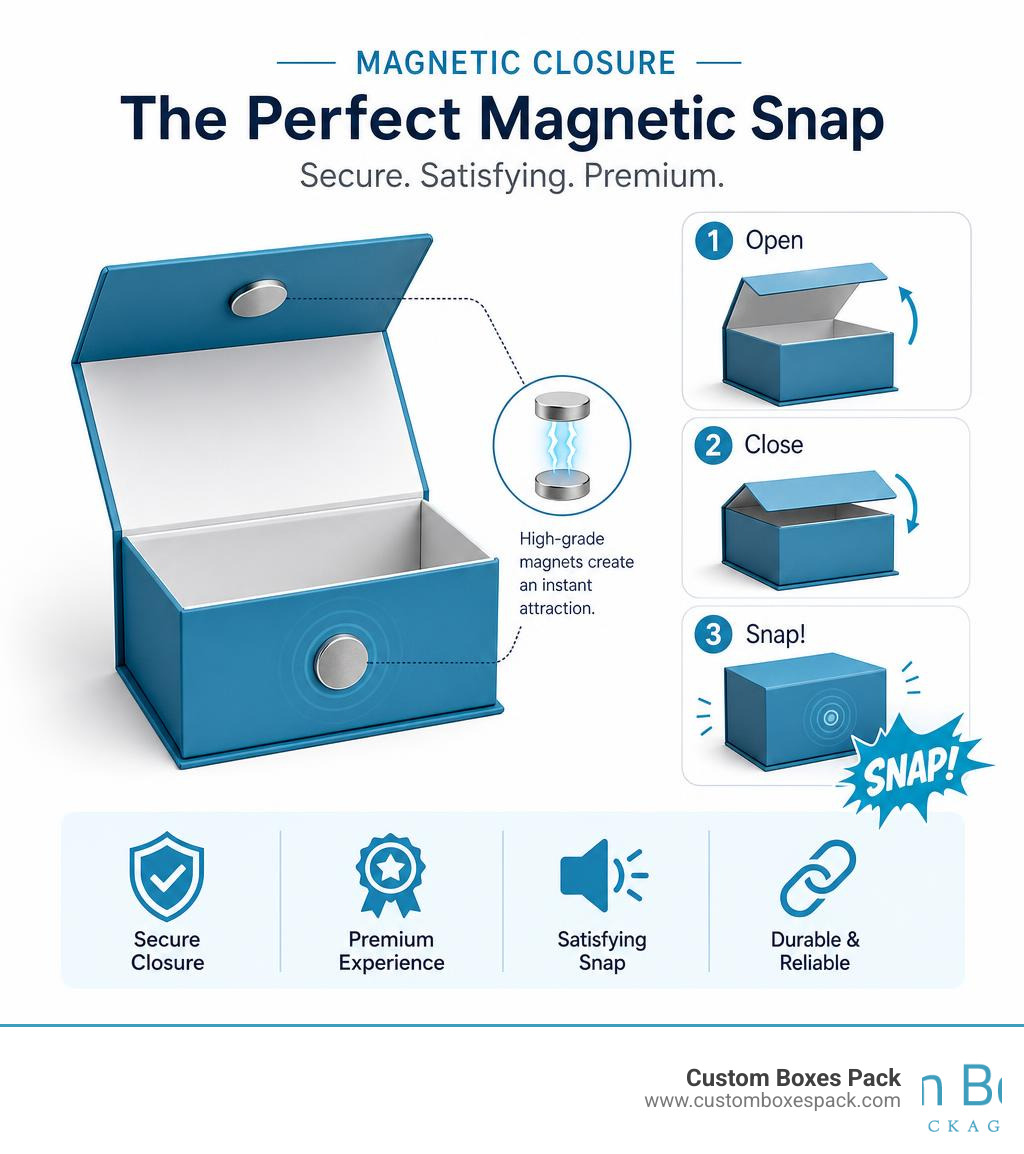
While magnetic closures add a touch of luxury, sustainability remains a priority for modern shoppers. In 2026, eco-friendly packaging is no longer a niche preference; it is a baseline expectation.
- Eco-Friendly Stats: According to recent industry surveys, 67% of customers prefer eco-friendly packaging when choosing between two similar products. Furthermore, 66% of consumers are willing to pay more for sustainable packaging materials.
- Sustainable Materials: We offer FSC-approved (Forest Stewardship Council) paperboards and 100% recycled post-consumer kraft paper.
- Eco-Friendly Inks & Coatings: By combining these materials with soy-based or water-based inks and biodegradable aqueous coatings, you can create a fully recyclable, gorgeous flip top box that does not harm the planet.
To see how you can combine luxury closures with sustainable materials, browse our collection of Custom Packaging Boxes.
Customization Options: Printing, Finishes, and Inserts
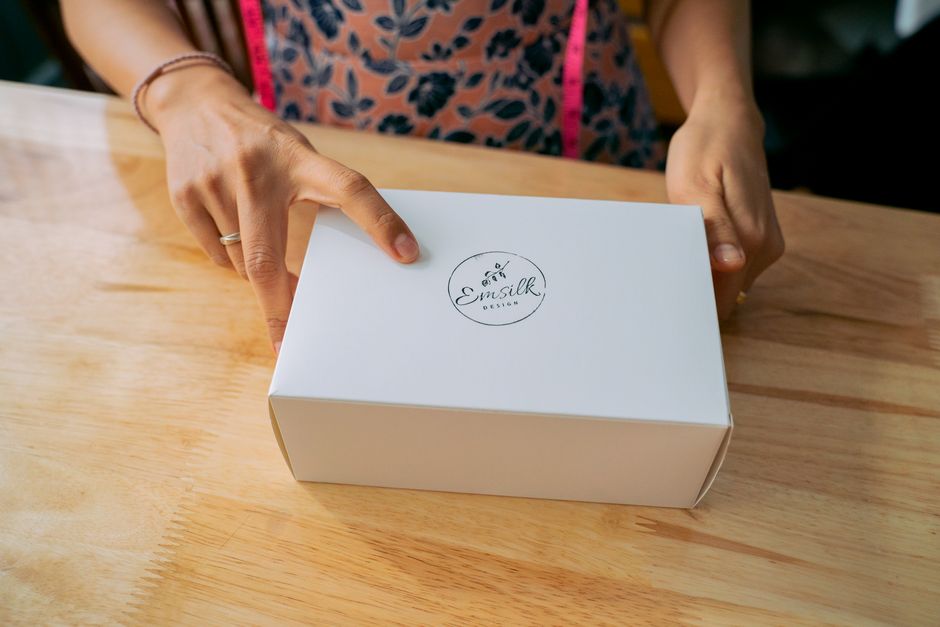
Once you have selected your material and closure, it is time to focus on design. The unboxing experience has become a critical touchpoint for modern brands.
- The Social Media Effect: Studies show that 40% of buyers are more likely to post a picture of a product on social media if the packaging is well-designed and visually appealing.
- Brand Loyalty & Recognition: Consistent branding across your physical packaging can lead to a 33% boost in brand recognition and up to 23% revenue growth. In fact, 52% of consumers make repeat purchases from brands that deliver premium, reusable packaging.
To achieve these results, you must choose the right printing methods, finishes, and protective inserts.
Printing Methods
- Offset Printing: Best for large wholesale runs, offset printing offers unmatched image clarity and color accuracy.
- Digital Printing: Ideal for shorter runs and quick turnarounds, digital printing requires no plate setup costs and allows for easy design variations.
- Pantone Matching System (PMS): To ensure your brand colors look identical across different production runs, we use PMS color matching to prevent any variance.
Luxury Finishes
- Foil Stamping: Apply metallic gold, silver, or rose gold foil to your logo to catch the light and add instant elegance.
- Embossing & Debossing: Raise or recede your branding elements on the paperboard to create a tactile, premium texture.
- Spot UV: Apply a high-gloss protective coating to specific areas of your design (like your logo or a pattern) to contrast beautifully against a matte background.
Custom Inserts
Your product should never rattle around inside its box. Custom inserts keep your items centered, safe, and beautifully presented.
- Custom-Cut Foam: Perfect for delicate items like glass perfume bottles, electronics, or cosmetics.
- Molded Pulp or Cardboard: A highly recyclable, eco-friendly option that is custom-shaped to hold your products securely.
- Velvet & Satin Linings: Often paired with rigid boxes for jewelry, watches, or luxury gift sets to add a layer of soft elegance.
To learn how to design a logo-centric box that stands out, read The Complete Guide to Custom Logo Boxes.
Designing the Perfect Unboxing Experience with Custom Finishes
To create a truly memorable unboxing experience, consider using a soft-touch lamination. This finish gives the exterior of your box a velvety, peach-fuzz texture that is incredibly satisfying to hold.
Another excellent design strategy is inside-lid printing. Because flip top boxes start as flat sheets during the printing process, we can easily print on both the interior and exterior of the box. Use the inside lid to print a personalized thank-you note, share your brand’s origin story, or print a custom QR code that directs customers to a tutorial or loyalty program.
For more design inspiration and practical tips, check out Your Guide to Custom Box Design for Better Packaging.
Sourcing Wholesale: MOQs, Turnaround Times, and Logistics
When sourcing packaging at a wholesale level, managing your supply chain efficiently is just as important as the design itself. For startups and growing businesses, balancing cash flow with unit costs is a delicate dance.
For a helpful overview of how startups can navigate their initial packaging runs, check out Food & Product Packaging Solutions for Start ups Princeton.
Step-by-Step Guide on How to Choose the Best Custom Flip Top Boxes for Your Products
To ensure you get the perfect box without any costly mistakes, follow this step-by-step framework:
- Measure Your Product Accurately: Always measure the maximum length, width, and depth of your product. If you are packaging multiple items together, lay them out exactly as you want them to appear inside the box and measure the overall footprint.
- Determine the Weight & Fragility: Heavier or fragile items require corrugated board or thick rigid board with foam inserts. Lightweight items can easily use cost-effective SBS paperboard.
- Define Your Budget & Shipping Goals: If you have limited warehouse space and want to keep shipping costs low, choose a foldable cardboard flip top box that ships flat. If luxury is your primary goal, invest in a rigid magnetic flip top box.
- Incorporate Seasonal Campaigns: Take a page out of Lindt’s playbook. Consider planning limited-edition seasonal designs (like holiday themes or summer promotions) to drive urgency and boost sales.
- Review the Checklist: Before sending your artwork to print, run through our Ultimate Checklist for Custom Printed Retail Packaging to ensure your bleed lines, color profiles, and text placements are correct.
Sourcing Low-MOQ Solutions: How to Choose the Best Custom Flip Top Boxes for Your Products
At Custom Boxes Pack, we understand that small businesses and startups cannot always commit to thousands of units upfront. That is why we offer low minimum order quantities (MOQs) starting at just 100 units.
Our standard production and turnaround times average 8 to 12 business days, with rush options available in just 4 to 6 days. By offering free design assistance and free shipping across the USA, we help you keep your upfront costs low while maintaining premium quality.
To learn more about how custom packaging can serve as a powerful marketing tool for your brand, read our guide on Why Go for Custom Boxes for Your Marketing.
Frequently Asked Questions about Flip Top Packaging
Are custom flip top boxes shipped flat or fully assembled?
It depends entirely on the material and style you choose. Cardboard, kraft, and corrugated flip top boxes are designed to ship flat (knocked down). This saves you massive amounts of storage space and keeps your shipping costs low. They come pre-glued with crease lines, making them incredibly easy and fast to assemble by hand.
However, luxury rigid flip top boxes (made from thick greyboard) cannot be folded and are shipped fully assembled. For a comprehensive comparison of assembly styles and luxury options, see Custom Boxes – A Complete Guide to Luxury Printed Packaging Wholesale.
Can I customize both the interior and exterior of a flip top box?
Absolutely! Double-sided printing is highly recommended for flip top boxes. Printing a solid brand color, a beautiful pattern, or a welcoming message on the inside lid creates a “theatrical” opening experience that delights customers and encourages them to share their unboxing on social media.
What is the typical minimum order quantity (MOQ) for custom flip top boxes?
While many traditional manufacturers require orders of 500 to 1,000 units, we offer flexible wholesale options with an MOQ of just 100 units. This allows startups and small brands to test designs, run seasonal campaigns, and manage inventory without a massive upfront investment.
Conclusion
Choosing the best custom flip top boxes for your products is an investment in your brand’s future. By selecting the right materials, designing a captivating unboxing experience, and choosing a reliable manufacturing partner, you can turn simple packaging into a powerful engine for customer loyalty and sales growth.
At Custom Boxes Pack, we are proud to be a premier packaging partner for businesses across the United States. Operating out of our key locations including Trenton, NJ (944 Genesee St Trenton NJ, USA), we manufacture fully customizable sizes and styles with vibrant 4-color printing. With our low MOQ of 100 units, free design support, free shipping, and commitment to eco-friendly recyclable materials, we make premium packaging accessible to brands of all sizes.
Ready to elevate your brand’s presentation? Explore Custom Boxes Wholesale today, request a free quote, and let us help you design a box that your customers will love to open.