What Factors Affect Custom Flip Top Box Pricing?

Why Understanding What Factors Affect Custom Flip Top Box Pricing Saves You Money
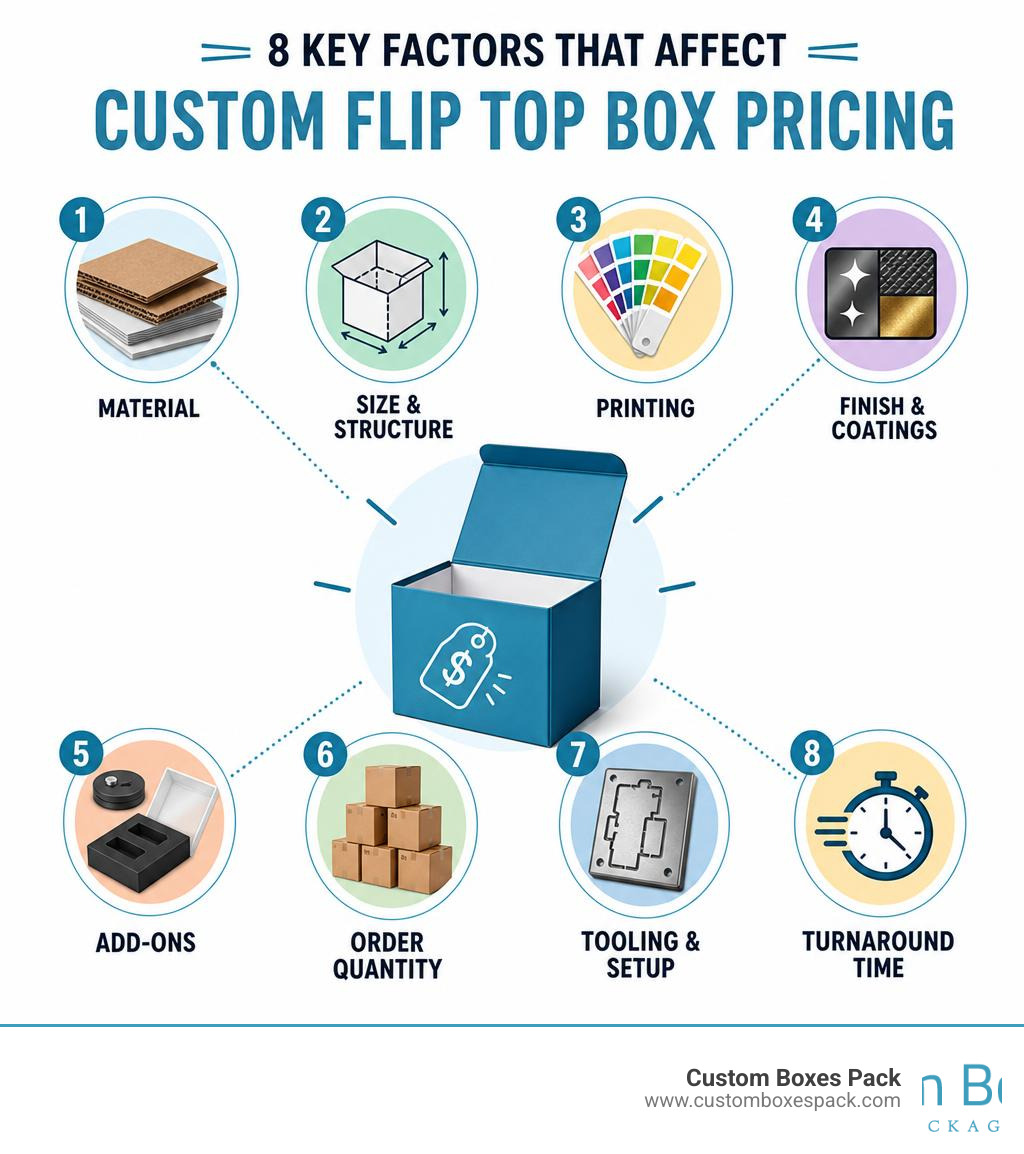
What factors affect custom flip top box pricing comes down to a handful of key variables that every business owner should know before placing an order.
Here’s a quick answer:
- Material type (kraft, cardboard, corrugated, or rigid board)
- Box size and structural complexity (dimensions, die-cut shapes)
- Printing method and color coverage (digital, offset, CMYK, Pantone)
- Coatings and finishes (matte, gloss, spot UV, foil stamping, embossing)
- Add-ons (magnetic closures, foam inserts, window patching)
- Order quantity (bulk orders can reduce per-unit cost by up to 80%)
- Tooling and setup fees (spread across units — larger runs mean lower cost per box)
- Turnaround time (rush production adds cost)
Pricing can range from as low as $0.25–$0.55 per unit on large bulk orders to $5.00–$20.00+ for small runs of fully customized rigid flip top boxes. Most businesses land somewhere in between, depending on their packaging goals and volume.
For small and mid-size brands, packaging costs often feel unpredictable. You request a quote, get a number that seems high, and aren’t sure which choices are driving that price up — or how to bring it down without hurting your brand.
That’s exactly what this guide is here to fix.
I’m Adam John, a backlinking and packaging content expert who has spent years researching what factors affect custom flip top box pricing across suppliers, materials, and order volumes. In this guide, I’ll break down every variable so you can make smarter, more confident packaging decisions.
What Factors Affect Custom Flip Top Box Pricing? definitions:
- How to Choose the Best Custom Flip Top Boxes for Your Products
- Custom Flip Top Boxes vs Magnetic Closure Boxes: Which Is Better?
- Bulk Custom Magnetic Boxes With Logo Packaging
Understanding What Factors Affect Custom Flip Top Box Pricing?
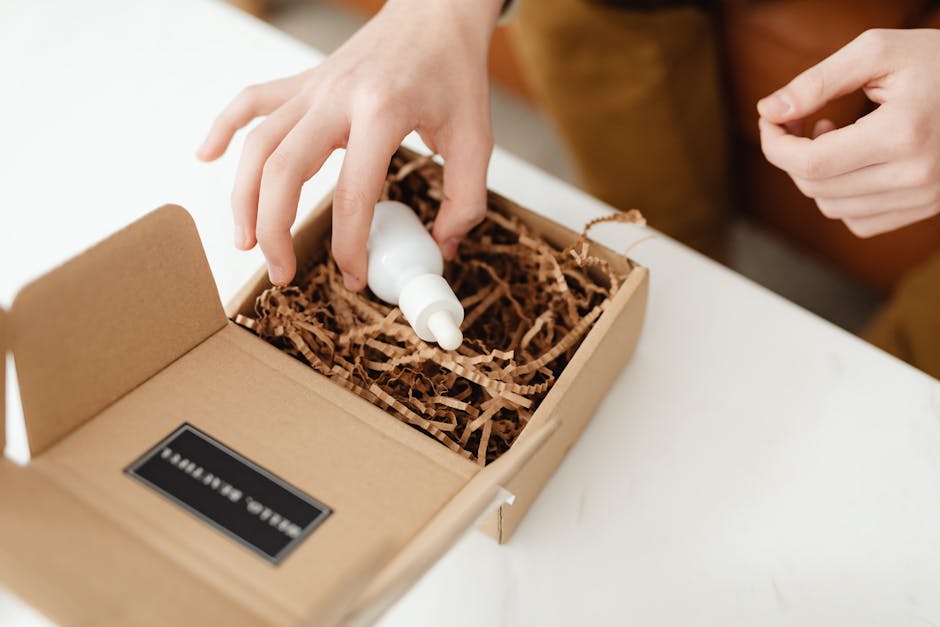
Before diving into the numbers, it is essential to understand what makes a flip top box unique. Also referred to as hinged lid or clamshell boxes, these structures feature a lid that is permanently attached to the main body of the box. This design creates a guided unboxing experience; instead of lifting a lid completely off, the user flips it back, revealing the product inside like a treasure chest.
This structural integrity makes flip top boxes a favorite across high-end retail, cosmetics, electronics, and luxury gifting. However, because the lid and base are integrated, the engineering behind them is more complex than a standard two-piece box. The hinge must be durable enough to withstand repeated opening and closing without tearing or warping. To master these design details, check out our comprehensive resource, A Complete Buyers Guide to Custom Flip Top Packaging.
Every design decision you make—from the thickness of the paperboard to the strength of the magnetic lock—directly impacts the manufacturing process and, ultimately, your final invoice. Let’s look at the specific variables that dictate these costs.
How Material Selection Influences What Factors Affect Custom Flip Top Box Pricing?
The foundation of any box is its material. The type of paper stock you select accounts for roughly 45% to 60% of your total packaging cost. For custom flip top boxes, we generally work with four primary material families, each carrying a different price point and performance profile.
- Kraft Paper (250 to 400 GSM): Made from wood pulp, eco-friendly Kraft paper is highly biodegradable and recyclable. It is naturally brown (though white Kraft is available) and offers a rustic, organic appeal. Because it requires less chemical processing, Kraft is one of the most cost-effective materials, making it perfect for organic cosmetics, jewelry, and eco-conscious brands.
- Cardboard / SBS Board (10pt to 28pt): Solid Bleached Sulfate (SBS) is a premium, bright white paperboard that offers an incredibly smooth surface for high-resolution printing. It is lightweight, flexible, and moderately priced, commonly used for retail cosmetic boxes and pharmaceuticals.
- Corrugated Stock (E-flute or B-flute): If your flip top box is going to double as a shipping mailer, corrugated stock is the way to go. Its layered fluting provides shock-absorbing and crush-resistant properties. It is slightly more expensive than standard cardstock but significantly cheaper than rigid board, offering excellent value for subscription boxes.
- Rigid Stock (60pt to 100pt / 700 to 800 GSM): This is the gold standard for luxury packaging. Rigid boxes are constructed from thick, condensed chipboard wrapped in premium art paper, velvet, linen, or satin. Because they do not ship flat and require semi-manual assembly, rigid flip top boxes are the most expensive option, often costing three to five times more than folding carton equivalents.
To understand how these stocks perform under different manufacturing conditions, read our guide on Factors to Consider When Choosing Folding Carton Boxes.
Box Size and Structural Complexity
It is a simple rule of manufacturing: larger boxes require more raw material, which increases the unit cost. However, size also impacts pricing through material waste. During the die-cutting process, boxes are stamped out of large sheets of paperboard. If your box dimensions do not align efficiently with the sheet size, it leaves behind unusable scrap material—waste that you still have to pay for.
Beyond flat dimensions, structural complexity plays a massive role. A standard rectangular flip top box is highly automated and inexpensive to produce. However, if you request custom die-cut shapes, hexagonal structures, or double-walled reinforced panels to protect fragile items, the machinery must be adjusted. This increases setup times, manual labor, and quality control checks, raising the final price. For a deeper look at how structural design choices impact your bottom line, understanding these variables is key to managing your overall packaging budget.
Printing, Coatings, and Finishing Options
Once the physical structure of your box is designed, the next step is customization. How you choose to decorate your packaging directly influences its visual appeal, surface aesthetics, and final cost.
Printing Methods and Color Consistency
The visual identity of your brand relies on crisp, vibrant colors. When printing custom flip top boxes, the two primary methods used are digital printing and offset printing.
- Digital Printing: Best suited for short runs (under 500 units). It has virtually no setup cost because it prints directly from a digital file, much like an office printer. However, the cost per unit remains constant regardless of order size.
- Offset Printing: The industry standard for high-volume orders. It uses metal plates to transfer ink onto the paperboard, delivering incredibly sharp, retail-ready 2400 DPI resolution. While the initial setup fee is high, the cost per unit drops dramatically as your order volume increases.
Your color choices also dictate pricing. Standard full-color printing uses the CMYK (Cyan, Magenta, Yellow, Key/Black) process. If your brand requires absolute color consistency across different production runs, you will need to use the Pantone Matching System (PMS). PMS inks are pre-mixed to match exact color codes, which adds a premium to your printing bill but guarantees your brand colors look identical every single time. Learn more about preparing your designs by reading our Ultimate Checklist for Custom Printed Retail Packaging.
Coatings, Laminations, and Special Finishes
Plain printed paperboard is vulnerable to moisture, scuffs, and fingerprints. To protect your design and elevate its tactile feel, we apply protective coatings and premium laminations:
- Matte Lamination: Gives a smooth, non-reflective, soft finish that exudes modern luxury.
- Gloss Coating: Reflects light, making colors pop with high-intensity vibrance.
- Aqueous Coating: A fast-drying, water-based protective layer that is highly eco-friendly and budget-friendly.
- Spot UV: A glossy, raised liquid silicone layer applied only to specific areas (like a logo), creating a striking contrast against a matte background.
- Foil Stamping: Uses heat and pressure to apply metallic foils (gold, silver, rose gold) to the box surface.
- Embossing and Debossing: Physically raises or lowers elements of the paperboard to create a tactile, three-dimensional effect.
These premium finishes can add anywhere from $0.10 to $1.50+ to the cost per unit, depending on the surface area covered. For insights on how to leverage these finishes to grab retail attention in the US market, read Designing Flip Top Boxes to Capture US Consumer Attention.
Add-ons, Closures, and Custom Inserts
The unboxing experience is a powerful physical touchpoint. Adding functional elements to your custom flip top boxes enhances product protection and luxury presentation, but it also introduces variable costs.
Magnetic Closures and Sensory Appeal
One of the most popular features of high-end flip top packaging is the magnetic closure. By embedding small, powerful magnets within the front lip of the lid and the base panel, the box seals itself with a satisfying, audible “snap.”
This sensory closure immediately signals high value and security to the consumer. However, embedding these magnets requires precision die-cutting and manual or semi-automated assembly, which adds to the labor cost. If you are debating whether this feature is worth the investment for your product, check out our detailed comparison, Custom Flip Top Boxes vs Magnetic Closure Boxes Which is Better.
Custom Inserts and Window Patching
If your product is fragile or consists of multiple pieces (such as a cosmetic kit or a watch with accessories), custom inserts are vital.
- Cardboard Dividers: The most affordable, eco-friendly option. They are die-cut to keep products separated and secure.
- Custom Foam Inserts (EVA or EPE): Perfect for high-end electronics, perfumes, or glassware. These are precision-cut using CNC lasers to hug the exact contours of your product. While highly protective and premium, custom foam can add $0.50 to $3.00+ per box.
- Window Patching: Adding a clear plastic window made from recyclable PET allows customers to view the product inside without opening the box. This requires an extra step in the die-cutting and gluing process, slightly increasing production costs.
Order Volume, Tooling, and Logistics
Many business owners are surprised to find that the largest factor affecting their custom packaging price isn’t the gold foil or the magnetic closure—it is the size of their order.
How Order Volume Impacts What Factors Affect Custom Flip Top Box Pricing?
Packaging manufacturing is highly dependent on economies of scale. Setting up an industrial printing press and die-cutting machine takes hours of calibration, test runs, and labor. If we run 100 boxes, those fixed setup costs are divided among just 100 units. If we run 10,000 boxes, those setup costs are spread so thin they practically disappear.
Consider these industry statistics:
- Buying wholesale folding boxes can reduce input costs by 25% to 30% compared to retail rates.
- Businesses can save approximately 80% of the total cost when order volumes exceed 5,000 units.
- At 5,000 units, a custom-printed box averages $0.75 per unit (representing an 83% savings vs. retail sample runs).
- At 10,000+ units, the price drops to between $0.28 and $0.49 per unit (representing up to 90% savings).
To illustrate this dramatic difference, let’s look at a comparative pricing table for a standard custom-printed medium folding cardboard flip top box:
| Order Quantity (Units) | Est. Unit Price (Retail/Short Run) | Est. Unit Price (Wholesale Bulk) | Average Savings (%) |
|---|---|---|---|
| 100 (MOQ) | $3.50 – $5.00 | N/A | Baseline |
| 500 | $1.80 – $2.50 | $1.20 – $1.70 | ~30% |
| 1,000 | $1.20 – $1.80 | $0.80 – $1.15 | ~40% |
| 5,000 | $0.75 – $1.10 | $0.45 – $0.65 | ~80% |
| 10,000+ | N/A | $0.28 – $0.42 | ~90% |
This dramatic difference highlights how bulk ordering can significantly optimize your packaging budget and lower your overall cost per unit.
Tooling Setup Fees and Turnaround Times
Initial orders of custom-sized boxes require the creation of a physical steel die-cut template (the “tooling”). This tooling fee is a one-time charge (usually ranging from $150 to $800 depending on complexity). On subsequent reorders, this fee is waived because the die already exists.
Production lead-time also plays a role in logistics and pricing. Standard production typically takes 8 to 12 business days. If your brand requires expedited shipping or rush production (4 to 8 days), manufacturers must disrupt their standard schedules, which incurs a rush fee. At Custom Boxes Pack, we help mitigate these logistical hurdles by offering free shipping and free design assistance across the USA, directly from our operations. Learn more about how to utilize design services to streamline your setup by visiting The Secret to Professional Packaging with Free Design Services.
Average Price Ranges and Cost-Saving Strategies
To budget effectively for your product launch or retail season in June 2026, it helps to understand the baseline price expectations for different box styles.
Average Price Ranges by Box Type
Based on current market trends, here are the estimated price ranges for wholesale custom flip top boxes depending on their material class:
- Kraft Flip Top Boxes: $0.25 to $1.20 per unit. Ideal for lightweight items, organic cosmetics, and eco-friendly retail.
- Cardboard Folding Boxes: $0.35 to $1.80 per unit. Highly customizable, excellent for high-resolution graphics and standard retail products.
- Corrugated Flip Top Mailers: $0.50 to $2.50 per unit. Built for shipping durability, ideal for e-commerce and subscription boxes.
- Rigid Flip Top Boxes (with Magnetic Closures): $1.50 to $8.00+ per unit (can exceed $15.00 for highly complex luxury designs with custom foam inserts). Best for high-ticket jewelry, watches, perfumes, and premium electronics.
These price ranges provide a solid baseline as you plan your packaging budget and select the best style for your brand.
Balancing Affordability with Premium Quality
You do not have to break the bank to get stunning packaging. Here are three professional strategies we recommend to optimize your packaging budget without sacrificing brand appeal:
- Size Optimization: Even a half-inch reduction in box dimensions can yield massive savings. It reduces material usage, minimizes shipping weight, and allows more boxes to fit on a single manufacturing sheet, reducing waste.
- Material Substitution: Love the look of a rigid box but don’t have the budget? Opt for a thick 28pt SBS cardboard folding box with matte lamination. It mimics the premium, smooth feel of a rigid box at a fraction of the cost—and it ships flat to save on freight.
- Simplify the Finishes: Instead of combining foil stamping, embossing, and spot UV, choose one standout finish. A clean, minimalist design featuring a spot UV logo on a matte black box often looks more sophisticated and costs significantly less.
Frequently Asked Questions about Flip Top Box Costs
What is the minimum order quantity for custom flip top boxes?
While many industrial manufacturers require minimum orders of 1,000 to 5,000 units, we offer a highly flexible MOQ of just 100 units at Custom Boxes Pack. This low entry point allows small businesses, startups, and e-commerce brands to test custom designs without a massive upfront capital investment.
Does choosing eco-friendly materials increase the cost of flip top packaging?
No! In fact, choosing biodegradable Kraft or recycled cardboard is often more cost-effective than using premium synthetic plastics or heavily processed SBS paperboard. Sustainable packaging is highly efficient to produce, has a lower carbon footprint, and resonates strongly with modern US consumers.
How long does it take to receive a custom flip top box order in June 2026?
Our standard production and delivery timeline is 8 to 12 business days after digital design approval. For urgent product launches, we offer expedited rush production options that can deliver your boxes in 4 to 8 business days, though rush shipping fees may apply depending on your location.
Conclusion
Navigating what factors affect custom flip top box pricing doesn’t have to be a guessing game. By understanding how material selection, box dimensions, printing styles, and order volumes interact, you can design a gorgeous, protective box that fits your budget perfectly.
At Custom Boxes Pack, we are proud to be your premier packaging partner. Operating out of Trenton, NJ, we supply fully customizable, eco-friendly, and wholesale custom-printed boxes across the USA. With our signature low MOQ of 100 units, free design support, and free shipping, we make premium packaging accessible to brands of all sizes.
Ready to elevate your brand’s unboxing experience? Contact us today to request a free custom quote and let’s bring your packaging vision to life!