How to Meet 2026 Packaging Standards in 5 Easy Steps

Why 2026 Is a Turning Point for Recyclable Packaging
Meeting 2026 Packaging Standards with 100% Recyclable Perforated Designs is now one of the most urgent priorities for any business that ships physical products — and the window to act is narrowing fast.
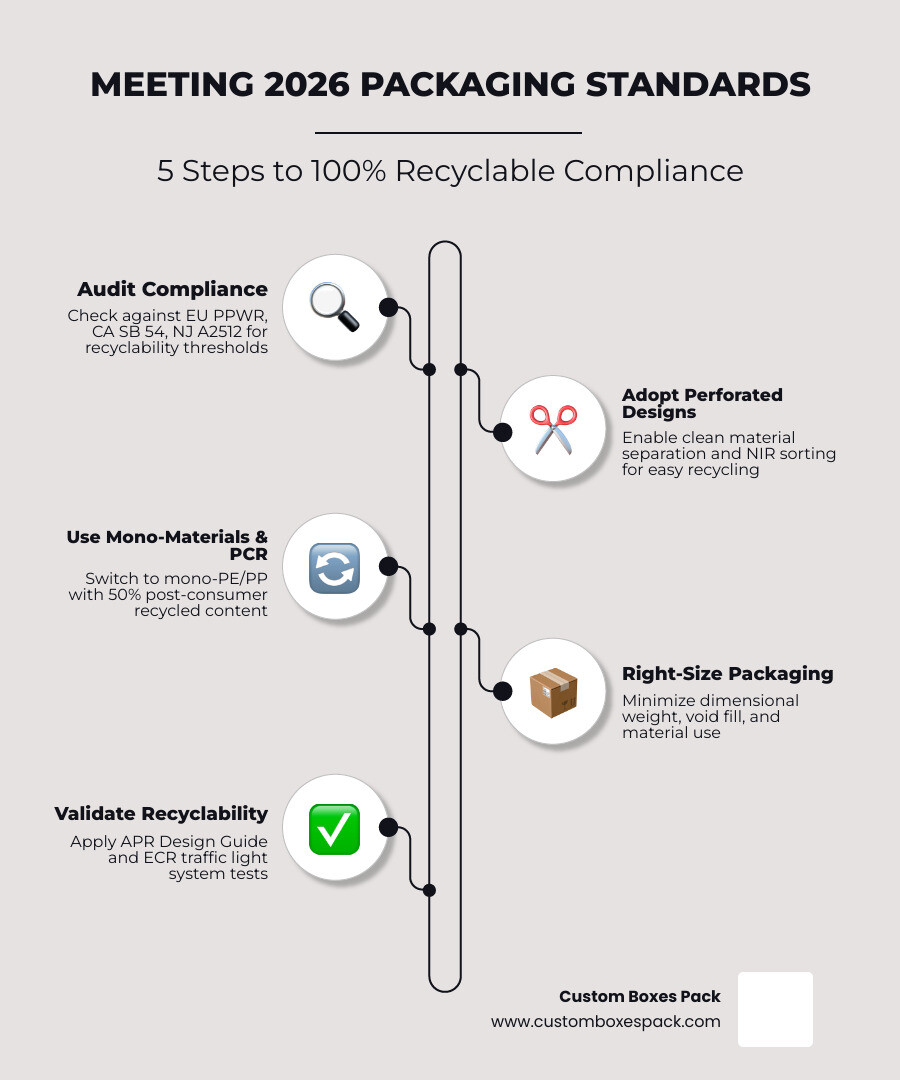
Here is a quick summary of how to do it:
- Audit your packaging against EU PPWR and US state laws like California SB 54
- Switch to perforated designs that support clean material separation and easy-open recycling
- Use mono-materials and PCR content to hit recyclability thresholds
- Right-size your packaging to cut dimensional weight costs and reduce waste
- Validate compliance using APR Design® Guide and ECR Austria’s traffic light system
The regulatory pressure is real. Under the EU Packaging and Packaging Waste Regulation (PPWR), all packaging sold in Europe must be recyclable by 2030, with the enforcement framework taking effect from August 2026. Packaging that falls below a 70% recyclability rate must be pulled from the market entirely. In the US, California’s law requires 65% of plastic packaging to be recycled by 2032, with 100% needing to be recyclable or compostable.
For small and mid-sized businesses, this is not just a compliance headache — it is a real commercial risk. Miss the mark, and you face fines, lost retail partnerships, or products blocked from key markets.
The good news? Perforated recyclable designs make compliance more achievable than most brands realise. They simplify material separation, improve sorting accuracy, and can even reduce your shipping costs at the same time.
I’m Adam John, a backlinking and packaging content expert who has spent years helping brands navigate sustainable packaging transitions, including meeting 2026 packaging standards with 100% recyclable perforated designs across e-commerce and consumer goods sectors. In this guide, I’ll walk you through five clear, practical steps you can start applying today.
Step 1: Audit Compliance Against EU PPWR and US State Laws
The first step we recommend for any brand is a deep-dive audit of current materials. As of May 2026, we are operating in a landscape where “recyclable” is no longer an opinion — it is a legal definition.
In the United States, several states have moved ahead with aggressive mandates. New Jersey, where we are located, has been active with legislation like Bill A2512 – NJ Legislature, which focuses on recycled content and recyclability standards. Simultaneously, 2026 U.S. packaging laws reshape sustainable materials are forcing manufacturers to rethink machine design to handle new, fiber-based or mono-plastic structures.
If you are shipping internationally, the EU Packaging and Packaging Waste Regulation (PPWR) is the gold standard you must meet. Even if you only sell in the US, these standards often become the blueprint for American retailers like Walmart or Target. You can explore our More info about Custom Recyclable Boxes to see how we’ve aligned our production with these evolving requirements.
Understanding the August 2026 EU PPWR Deadline
The August 2026 deadline is a major milestone. Under this regulation, packaging is graded on a scale (Levels A, B, and C). If your packaging achieves less than 70% recyclability, it is considered non-compliant and must be withdrawn from the market.
This isn’t just about the box; it includes labels, adhesives, and closures. Furthermore, Extended Producer Responsibility (EPR) reporting now requires us to prove exactly how much material we are putting into the waste stream and pay fees accordingly. The more recyclable your design, the lower your EPR fees will be.
Step 2: Meeting 2026 Packaging Standards with 100% Recyclable Perforated Designs
Why are we talking so much about perforations? Because they solve the “multi-material” problem. For years, the industry used shrink sleeves or labels that were made of different materials than the bottle or box they were on. When these hit a recycling facility, the sorting machines got confused, and the whole item ended up in a landfill.
Meeting 2026 Packaging Standards with 100% Recyclable Perforated Designs allows consumers to easily “zip” off a label or sleeve. This ensures that the PET bottle goes into the PET stream and the sleeve goes where it belongs. According to the Design Guidelines for Recyclability of Flexible Packaging, creating these clear separation points is vital for flexible films.
Improving NIR Sorting: Meeting 2026 Packaging Standards with 100% Recyclable Perforated Designs
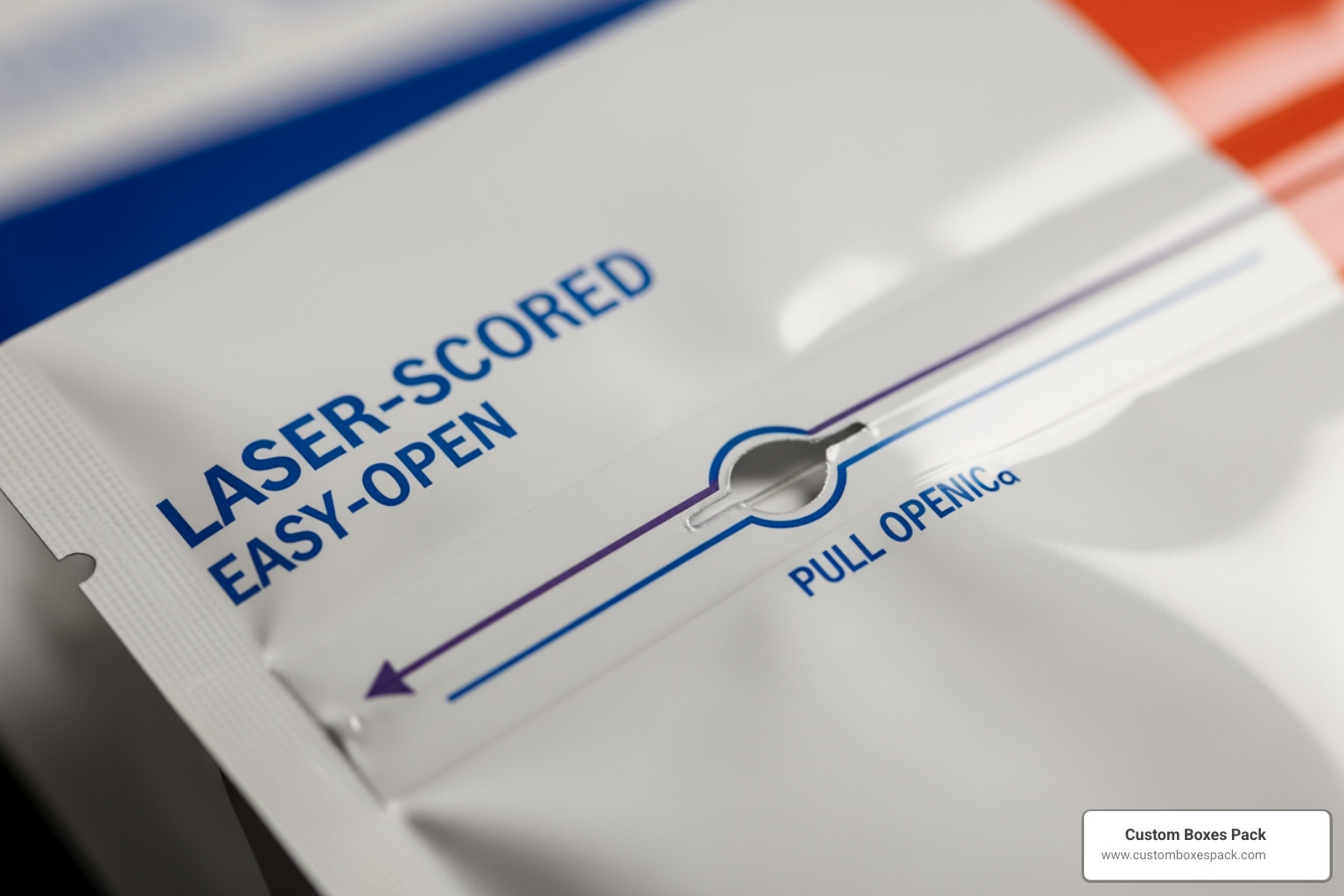
Recycling facilities use Near-Infrared (NIR) spectroscopy to identify materials. If a PET bottle is covered by a non-perforated, non-recyclable sleeve, the NIR laser sees the sleeve, not the bottle, and mis-categorizes it.
Perforated designs also help with:
- Density Separation: In sink-float tanks, perforated labels can be easily detached, allowing materials with different densities (like PET vs. PE) to separate naturally.
- Contamination Prevention: By removing non-recyclable elements before the main material is processed, we keep the “wash” clean.
- Carbon Black Elimination: Many perforated designs allow us to move away from carbon black pigments, which traditionally absorb NIR light and make packaging “invisible” to sorting robots.
Operational Advantages for Fulfillment and Unboxing
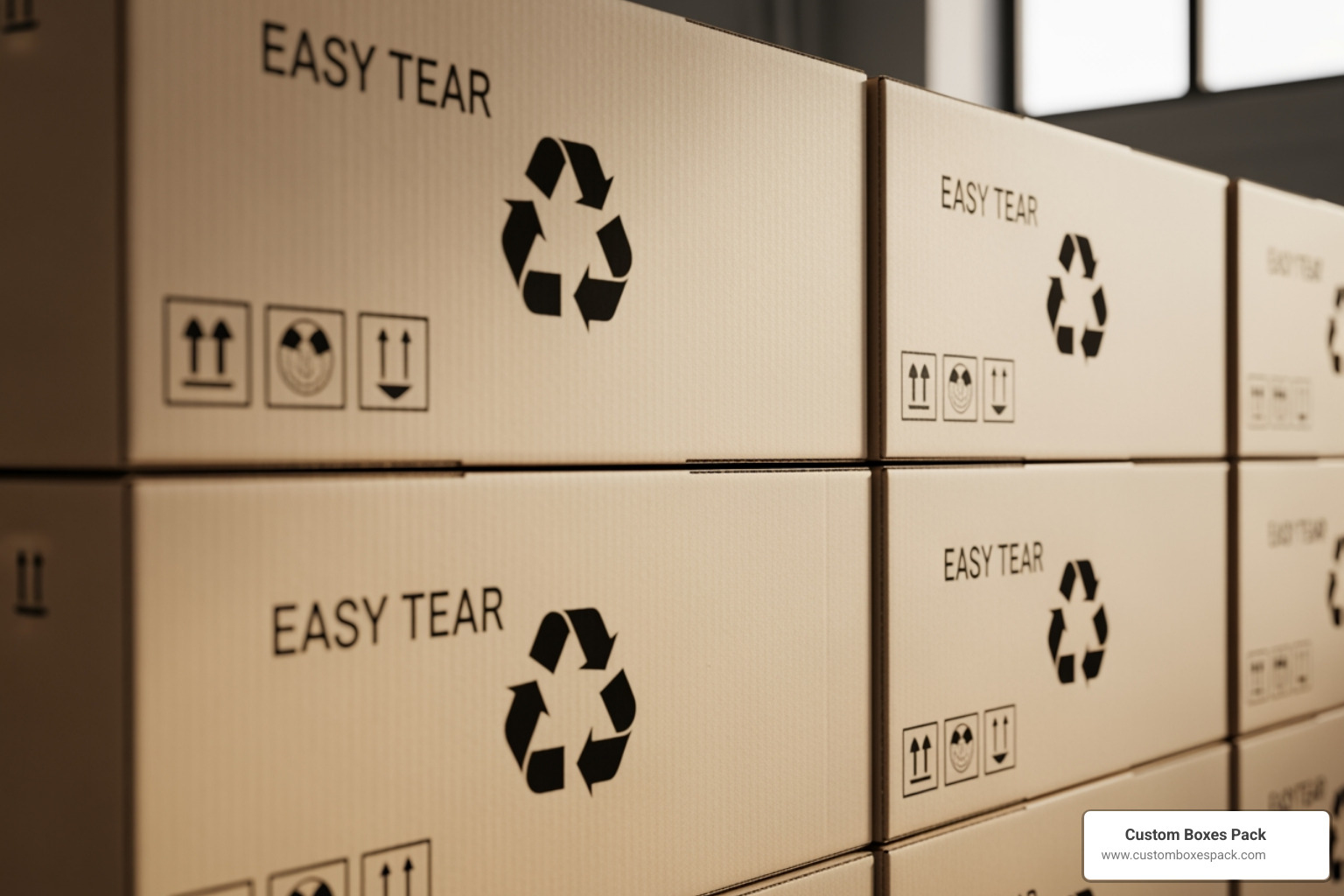
Beyond the recycling bin, perforated designs are a dream for fulfillment. We use perforated tear strips in our shipping boxes to create a “frustration-free” unboxing experience. No more hunting for scissors or a box cutter.
From an operational standpoint, these designs offer built-in tamper evidence. If the perforation is broken, the customer knows the package has been opened. This reduces the need for extra plastic tape or security seals, further helping you meet those 2026 standards.
Step 3: Shift to Mono-Materials and Post-Consumer Recycled (PCR) Content
The “holy grail” of 2026 compliance is the mono-material. This means the entire package — the box, the insert, and even the tape — is made from the same material family (usually all-paper or all-polyethylene).
We’ve seen incredible progress here. For example, Mondi and Dreco unveil powder detergent packaging with 50% PCR content. By using 50% Post-Consumer Recycled (PCR) content, they are already exceeding the EU PPWR targets of 35% PCR for detergent packaging by 2030.
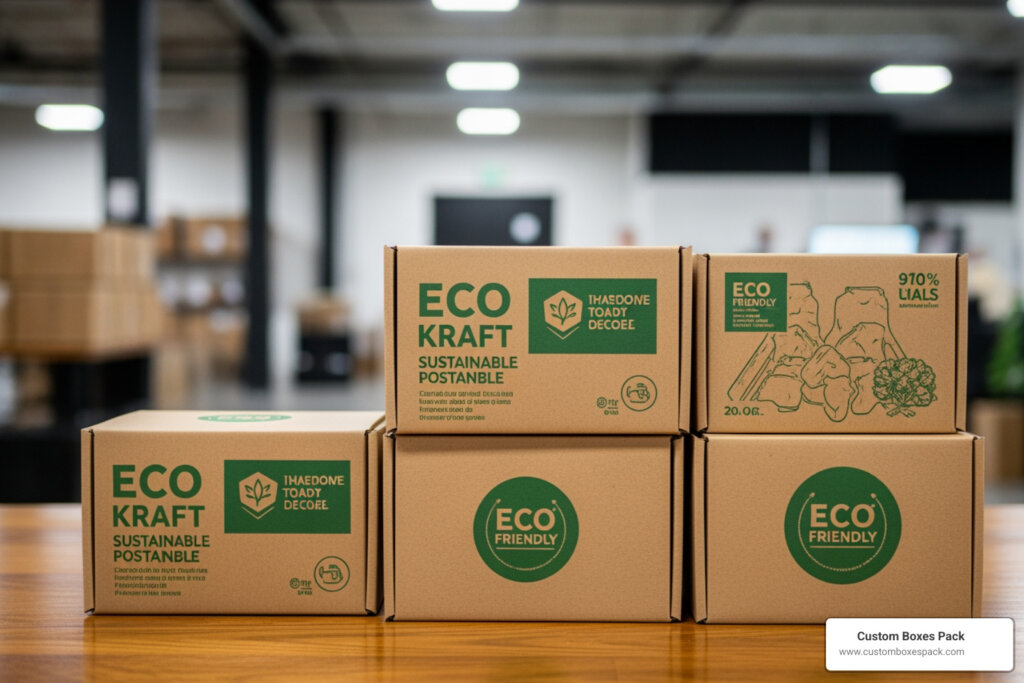
If you’re wondering how to start your transition, check out our Ultimate Guide to Eco Kraft Printed Packaging. Kraft is naturally mono-material and highly recyclable in curbside programs.
Case Study: Award-Winning 2026 Innovations
Looking at recent industry benchmarks can provide inspiration for your own designs. The 2026 APR Recycling Leadership Awards and the FPA Flexible Packaging Achievement Awards have highlighted several breakthroughs:
- POUCH3™ Cuboid: This format uses 30% less material than traditional flat-bottom pouches while being made of fully recyclable LDPE.
- PaperX FiberTop: This is the industry’s first tube where the body, shoulder, and cap are all fiber-based. It achieves up to an 87% reduction in plastic. You can read more about it here: PaperX FiberTop: fully paper-recyclable tube for plastic reduction.
- Tetra Pak Innovations: They have launched paper-based barriers for 1L aseptic cartons, replacing aluminum foil and boosting renewable content to 90%. Tetra Pak launches paper-based barrier for 1 L aseptic carton.
Step 4: Engineer Structural Minimalism for E-commerce Efficiency
In 2026, “over-packaging” is not just bad for the environment; it’s expensive. Shipping carriers now charge based on dimensional weight (DIM weight), meaning they bill you for the space your box takes up, not just how much it weighs.
By using perforated, custom-sized boxes, we help our clients eliminate “air” and the need for plastic void fill like bubble wrap or air pillows. You can Buy Custom Size Shipping Boxes that are engineered to fit your product exactly.
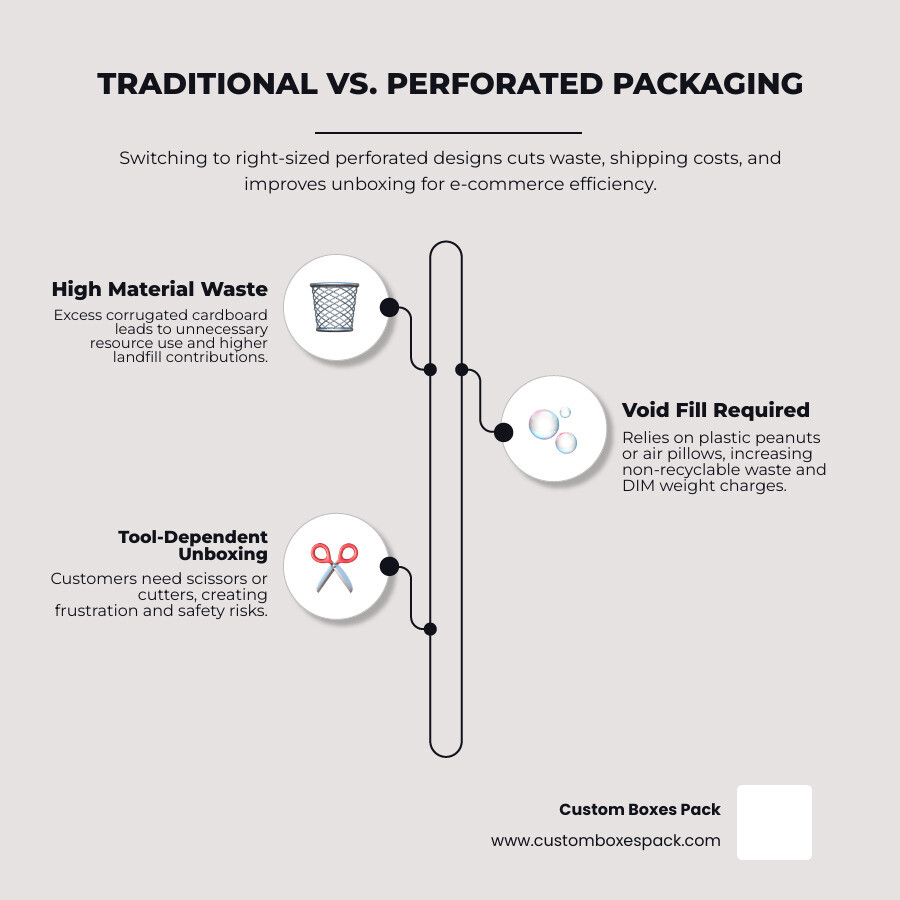
| Feature | Traditional Packaging | Right-Sized Perforated Packaging |
|---|---|---|
| Material Waste | High (excess corrugated) | Minimal (engineered fit) |
| Void Fill Needed | Plastic peanuts/air pillows | None or paper-based inserts |
| Unboxing | Requires tools/messy | Easy-tear strip/clean |
| DIM Weight Cost | Higher | Optimized/Lower |
| Recyclability | Mixed (tape/plastic/box) | 100% Mono-material |
Reducing Carbon Footprint through Material Substitution
We are seeing a massive shift toward “paperisation.” This involves replacing plastic components with molded pulp inserts or FSC-certified paper. For instance, many brands are switching to Recyclable Kraft Packaging to Make Your Surrounding Litter-Free because it has a significantly higher recovery rate (83% in Europe) compared to plastics (41%).
Using bio-based inks and avoiding metallic foils or heavy coatings ensures that the fibers can be easily reclaimed in standard paper mills. This structural minimalism is a core component of meeting 2026 packaging standards with 100% recyclable perforated designs.
Step 5: Validate Recyclability with APR and ECR Guidelines
Don’t just take our word for it — or your supplier’s word. To truly future-proof your business, you need to validate your designs against global guidelines.
The 2026 Sustainable Packaging Trends Report emphasizes that “greenwashing” is being met with heavy fines. Both the UK and EU have introduced Green Claims Codes that can fine companies up to 10% of their annual turnover for misleading environmental claims.
We suggest using the “Traffic Light” system from ECR Austria or the APR Design® Guide. These tools allow you to check if your adhesives, inks, and perforated attachments will actually pass through a modern recycling facility.
Future-Proofing: Meeting 2026 Packaging Standards with 100% Recyclable Perforated Designs
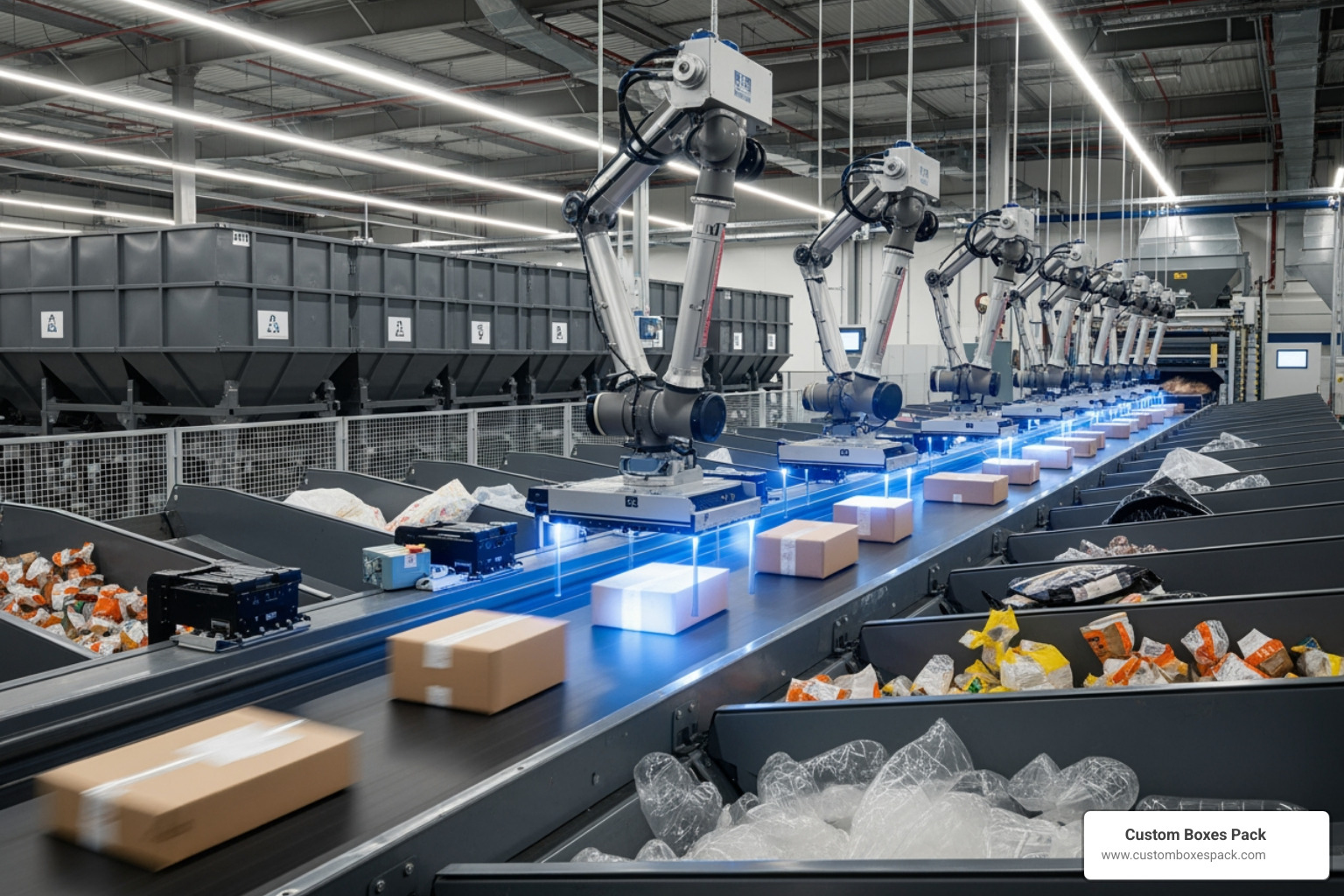
Looking ahead to 2035, the EU will require packaging to be “recycled at scale.” This means it’s not enough for a package to be technically recyclable; there must be an actual infrastructure that processes it in large volumes.
To prepare for this, many brands are integrating “Smart Packaging” features:
- QR Codes: These can provide consumers with localized recycling instructions based on their GPS location.
- Digital Product Passports: These store data on material composition, helping recyclers identify exactly what is in a package.
- Watermarks: Invisible digital watermarks can help sorting machines identify different types of food-grade vs. non-food-grade plastics.
Frequently Asked Questions about 2026 Packaging Standards
What are the key 2026 packaging regulations?
The most significant is the EU Packaging and Packaging Waste Regulation (PPWR), which sets strict recyclability and PCR content targets. In the US, state-level laws like California’s SB 54 and New Jersey’s Bill A2512 are the primary drivers, mandating high recycling rates and the elimination of non-recyclable materials by the early 2030s, with reporting starting now.
How do perforated designs improve recycling rates?
Perforated designs allow for the easy removal of components that are made of different materials (like a plastic sleeve on a metal can or a label on a PET bottle). This prevents contamination in the recycling stream and ensures that sorting machines (NIR) can accurately identify the base material.
What is the ‘recycled at scale’ requirement for 2035?
This is a future requirement under the EU PPWR. It states that for a package to be legally labeled as “recyclable,” there must be a proven, large-scale infrastructure in place to collect, sort, and recycle that specific material in the real world, not just in a laboratory setting.
Conclusion
At Custom Boxes Pack, we understand that meeting 2026 packaging standards with 100% recyclable perforated designs can feel like a daunting task. However, by taking a step-by-step approach — auditing your materials, embracing mono-materials, and using smart, perforated structures — you can turn this regulatory challenge into a competitive advantage.
We specialize in helping businesses in the USA, particularly around our home base in Trenton, NJ, transition to eco-friendly, wholesale custom boxes. Whether you need 4-color printing on a low MOQ of 100 units or a complete overhaul of your e-commerce fulfillment strategy, we are here to help.
Our designs focus on the “circular economy” — ensuring that your packaging protects your product today and becomes a resource for someone else tomorrow.
Start your transition to 100% Recyclable Kraft Packaging today and ensure your brand is ready for 2026 and beyond!