A Complete Buyer’s Guide to Custom Flip Top Packaging


Why Custom Flip Top Packaging Is Worth Your Attention in 2026
A complete buyer’s guide to custom flip top packaging is exactly what small and medium business owners need before spending a single dollar on boxes — because the wrong packaging choice can quietly hurt your brand while the right one can drive repeat purchases and social shares.
Here is a quick overview of what this guide covers:
| Topic | What You Will Learn |
|---|---|
| What flip top boxes are | Structure, mechanics, and how they differ from tuck-end or rigid boxes |
| Best materials | Kraft, cardboard, rigid board — and when to use each |
| Printing and finishes | Spot UV, foil stamping, embossing, and more |
| Structural features | Magnetic closures, inserts, windows, and ribbon pulls |
| Pricing and MOQs | Cost factors, minimum orders, and how to save money |
| Supplier selection | What to look for before placing an order |
| Sustainability | Eco-friendly materials and certifications |
| Design mistakes | Common errors and how to avoid them |
Packaging is no longer just a box. According to Ipsos, 72% of American consumers make buying decisions based on packaging design alone. And nearly 63% of shoppers say they repurchase a product simply because of how it looked.
Flip top boxes — also called hinged lid or book-shaped boxes — sit at the intersection of function and first impression. They protect your product, elevate your brand, and create the kind of unboxing moment that gets shared online.
Whether you sell cosmetics, jewelry, electronics, or bakery items, this guide walks you through every decision you need to make with confidence.
My name is Adam John, and as a backlinking and packaging content expert I have spent years researching what makes custom packaging work for growing brands — including compiling this complete buyer’s guide to custom flip top packaging from the ground up. From material selection to supplier vetting, this guide gives you everything you need to make a smart, informed purchase.
A Complete Buyer’s Guide to Custom Flip Top Packaging basics:
- Designing Flip Top Boxes to Capture US Consumer Attention
- The Minimalist Shine: Modern Foil and Spot UV Strategies for 2026
- Small Box, Big Impact: Designing Custom Gift Card Packaging That Pops
What is Flip Top Packaging and How Does It Differ From Other Styles?
When stepping into custom packaging, the terminology can feel like a foreign language. To make the smartest choice for your business, it helps to understand what makes flip top packaging unique and how it compares to other common box types.
Understanding the Basics: A Complete Buyer’s Guide to Custom Flip Top Packaging
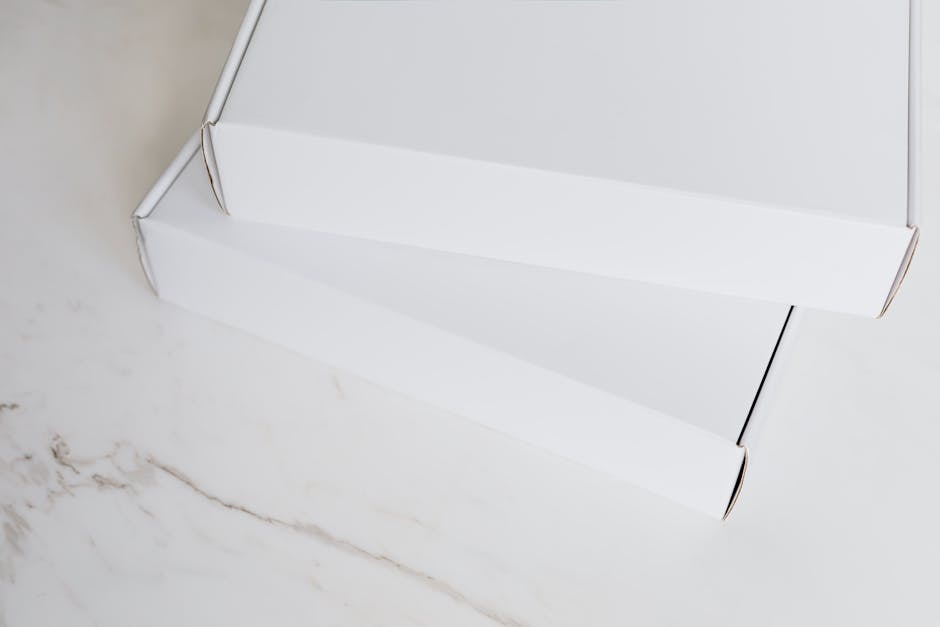
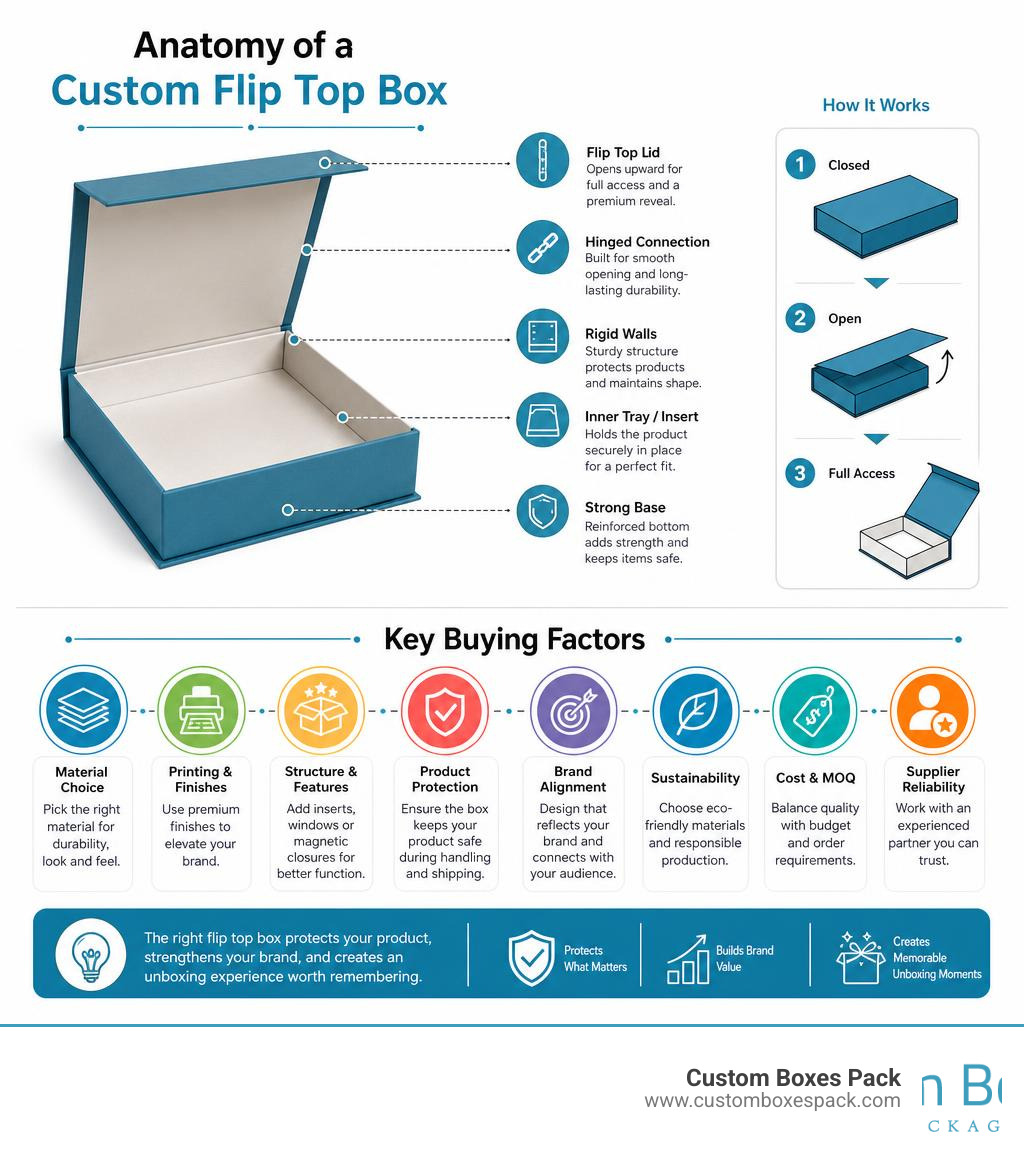
At its core, a flip top box is a packaging solution featuring a permanently attached hinged lid. Unlike a standard two-piece box where the lid detaches completely, a flip top box mimics the opening action of a book or a treasure chest. This design offers a seamless “unveiling” effect that keeps the lid securely attached so it never gets lost.
Structurally, these boxes are built for both beauty and brawn. Many styles utilize a double-wall design, providing extra protection along the sides to keep fragile items safe. The permanently connected lid acts as a natural display panel. When opened, the inner lid provides the perfect canvas for custom printing—whether that is a personalized thank-you note, your brand’s social media handles, or assembly instructions.
Flip Top vs. Tuck-End, Auto-Bottom, and Rigid Boxes
To appreciate the value of a flip top box, we must look at how it compares to other heavy hitters in the packaging industry:
- Tuck-End Boxes: These are your classic, lightweight retail cartons (think toothpaste or medicine boxes). They feature top and bottom flaps that tuck into the body. While incredibly cost-effective and fast to assemble, they lack the premium feel and structural strength of a flip top box.
- Auto-Bottom Boxes: Popular in retail and food environments, auto-bottom boxes feature a pre-glued bottom fold that snaps into place instantly when squeezed. They are excellent for heavy items and quick manual assembly on packing lines, but they do not offer the high-end unboxing experience of a hinged lid.
- Rigid Boxes: These are the gold standard of luxury packaging (think iPhone boxes). Made from thick, non-bendable greyboard, they are incredibly sturdy. Many flip top boxes are constructed as rigid boxes, but they can also be manufactured using lighter, foldable cardboard or corrugated fiberboard depending on your budget and shipping requirements.
To help you visualize these differences, we have put together a quick comparison table:
| Packaging Style | Material Thickness | Assembly Speed | Best Suited For | Perceived Luxury |
|---|---|---|---|---|
| Flip Top (Hinged Lid) | Medium to High (10pt – 100pt) | Fast to Instant | Cosmetics, Electronics, Luxury Gifts | High |
| Tuck-End | Low (10pt – 24pt) | Moderate (manual tucking) | Lightweight Retail, Pharmaceuticals | Low to Moderate |
| Auto-Bottom | Low to Medium (12pt – 28pt) | Very Fast (self-snapping) | Heavy Retail, Food, Electronics | Moderate |
| Standard Rigid Box | High (60pt – 100pt+) | Pre-assembled (requires storage) | High-end Jewelry, Luxury Tech | Extremely High |
Choosing between these styles depends heavily on your product weight, budget, and how you want your customers to feel when they open their package. If you are torn between a hinged lid style and a magnetic closure box, check out our comparison guide on Custom Flip Top Boxes vs Magnetic Closure Boxes Which is Better.
Key Benefits of Custom Flip Top Boxes for Modern Brands
Why are so many brands moving toward custom flip top packaging? The answer lies in the psychological impact of the unboxing experience and its direct connection to customer loyalty.
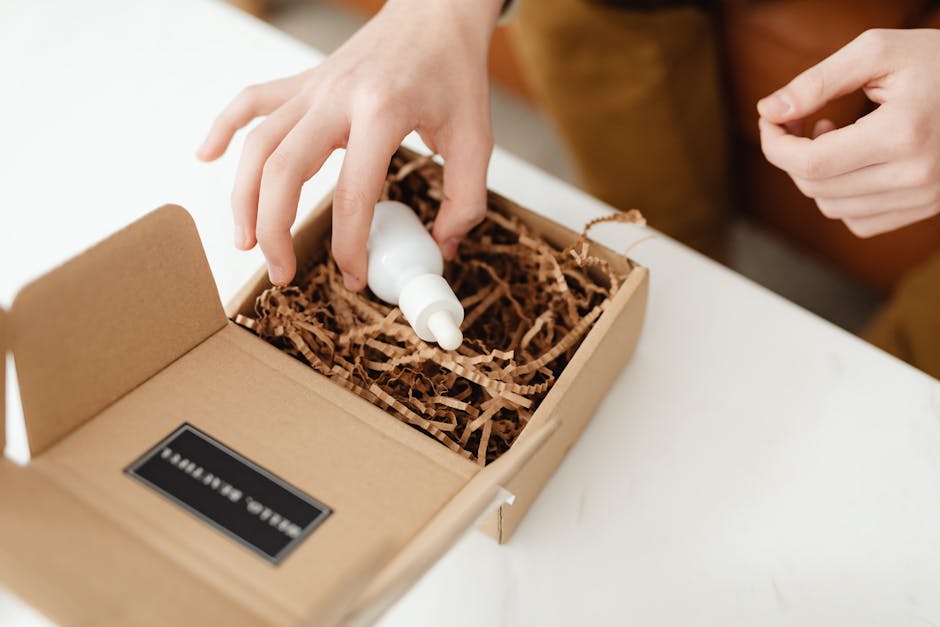
Elevating the Unboxing Experience and Brand Storytelling
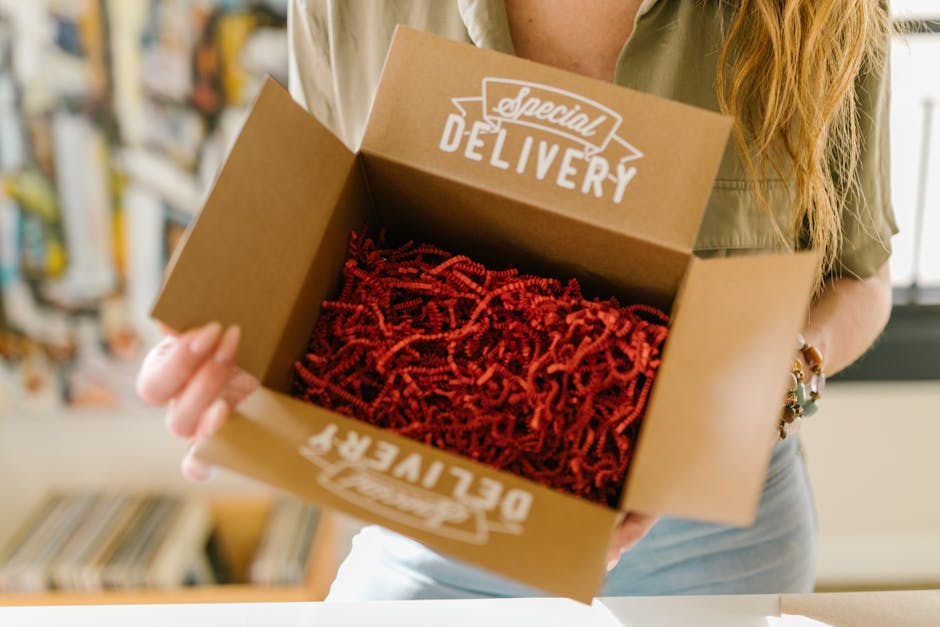
In the digital-first retail environment, the unboxing moment is one of the few physical touchpoints a brand completely controls. It is a powerful marketing tool. Think about it: there are over 90 million “unboxing” videos on YouTube, and 40% of consumers say they will post photos of a product online if the packaging is unique.

When a customer opens a flip top box, they experience a slow, satisfying reveal. This physical action builds anticipation. According to Dotcom Distribution, 61% of consumers are more likely to repeat a purchase of a luxury item if it comes in premium packaging. Furthermore, 50% of buyers state that gift-like or branded packaging makes them more likely to recommend the brand to others.
By utilizing the interior of the lid for brand storytelling—such as printing your origin story or a welcoming message—you build an immediate emotional connection. This attention to detail is highly effective; studies show that consistent branding across your packaging can boost brand recognition by up to 33%, driving a corresponding increase in customer trust and revenue.
Strategic Industry Applications for Retail and E-commerce
Flip top packaging is incredibly versatile and serves as a premium solution across multiple industries:
- Cosmetics & Beauty: From eyeshadow palettes to premium skincare sets, flip top boxes keep delicate glass bottles and pressed powders secure while looking stunning on retail shelves. You can read more about retail-specific strategies in our guide to Custom Retail Boxes.
- Jewelry & Luxury Goods: A sturdy rigid flip top box acts as both a protective vault and an elegant display case for watches, rings, and necklaces.
- Consumer Electronics: High-end tech products, like wireless earbuds or smart home accessories, benefit immensely from the clean, structured look of a flip top box with custom-molded inserts.
- Subscription Boxes & Gift Sets: Because they are highly durable and easy to open and close, flip top mailers are the perfect choice for monthly subscription services that want to deliver a “gift-like” experience directly to a customer’s doorstep.
Material, Printing, and Finishing Options
The secret to a great box lies in the materials you choose and how you decorate them. The right combination balances durability, cost efficiency, and visual appeal.
Selecting Eco-Friendly and Durable Materials
When designing your boxes, you have several material paths to choose from:
- Cardboard/Paperboard: Lightweight and highly customizable, standard cardboard (ranging from 12pt to 24pt) is perfect for retail shelves. It accepts vibrant color printing beautifully. Nearly 67% of American buyers say cardboard and paper-based packaging makes a product look more lucrative.
- Kraft Paper: Made from unbleached wood pulp, Kraft paper is 100% biodegradable and recyclable. It is the go-to choice for natural, organic, or eco-conscious brands. While it does not support high-gloss laminations, it offers a beautiful, rustic aesthetic.
- Rigid Board (Greyboard): Thick, dense, and premium. Rigid board (usually 60pt to 100pt) is wrapped in high-quality paper to create a box that does not bend or collapse. It is ideal for luxury items and gifts.
- Corrugated Fiberboard: Featuring a fluted inner layer, corrugated board is incredibly tough. It is the best choice for e-commerce shipping boxes that must withstand the rigors of the postal system.
Premium Finishes and Advanced Printing Techniques
Once you have selected your material, you can elevate its look using various printing and finishing options:
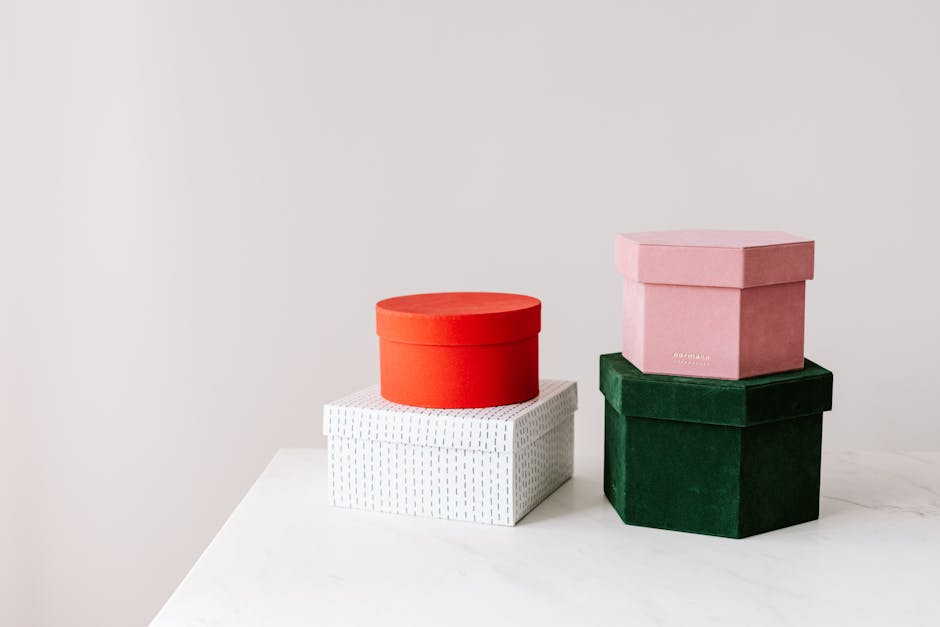
- Spot UV Coating: This technique applies a glossy, protective liquid to specific areas of your design (like your logo), creating a striking contrast against a matte background.
- Foil Stamping: Using heat and pressure, metallic foil (gold, silver, rose gold, or copper) is pressed onto the paper, adding a reflective, luxurious touch.
- Embossing & Debossing: These techniques raise or recede specific parts of your design, adding a tactile, three-dimensional texture that begs to be touched.
- Matte vs. Gloss Lamination: A matte lamination provides a soft, satin-like finish that minimizes glare, while gloss lamination makes your colors pop with high-shine energy.

At Custom Boxes Pack, we specialize in high-quality 4-color (CMYK) and PMS printing to ensure your brand colors are reproduced with absolute accuracy. To see how these finishes can be combined on a retail-ready box, explore our Custom Printed Boxes page.
A Complete Buyer’s Guide to Custom Flip Top Packaging
Designing a custom box requires balancing structural integrity with aesthetic appeal. Let’s look at how to select the right features to keep your products safe and eye-catching.
Choosing the Right Structural Features and Inserts
A flip top box is only as good as its internal layout. To prevent your products from rattling around during transit, you should consider custom inserts:
- Foam Inserts: Available in high-density EVA or softer polyurethane, custom-cut foam inserts hold delicate items (like perfume bottles or electronics) firmly in place. They can be lined with velvet or silk for an ultra-premium feel.
- Molded Pulp & Cardboard Trays: An eco-friendly alternative to plastic or foam. Molded pulp and die-cut cardboard inserts are fully recyclable and can be shaped to fit your product’s exact contours.
- Magnetic Closures: Adding small, hidden magnets to the front flap of your flip top box creates a satisfying “snap” when closed. This sensory detail immediately signals high quality to the customer.
- Ribbon Pulls & Windows: A small ribbon pull makes it easy to lift a product tray out of the box. Meanwhile, a custom die-cut window patched with clear PET plastic allows customers to see your product on the retail shelf without opening the box.
For step-by-step advice on matching these features to your specific product line, check out our guide on How to Choose the Best Custom Flip Top Boxes for Your Products.
Sourcing and Budgeting: A Complete Buyer’s Guide to Custom Flip Top Packaging
When you are ready to order, keeping costs under control is key. Here are our top tips for budgeting your custom packaging project:
- Leverage Bulk Discounts: The setup costs for printing and die-cutting are front-loaded. This means ordering 1,000 boxes will yield a significantly lower cost-per-unit than ordering 100 boxes.
- Avoid Oversized Packaging: Right-size your packaging to match your product. Not only does this save on material costs, but it also reduces your shipping volume and postal rates.
- Check the Minimum Order Quantity (MOQ): Many traditional manufacturers require orders of 1,000 or more. At Custom Boxes Pack, we support growing businesses by offering a low MOQ of just 100 units.
- Watch Out for Design Pitfalls: Ensure your design files have correct bleed lines (usually 0.125 inches) and that text is kept well away from fold lines. Always request a digital 3D proof or a physical sample before approving a mass production run.
Frequently Asked Questions about Flip Top Packaging
Navigating custom packaging can bring up a lot of questions. Here are the answers to the most common queries we receive from business owners.
What is the typical MOQ for custom flip top boxes?
While many manufacturers require high minimums, we understand that startups and small businesses need flexibility. We offer minimum order quantities starting at just 100 units. This allows you to test new designs, launch seasonal products, or manage inventory without a massive upfront capital investment.
Can flip top boxes be made from 100% sustainable materials?
Yes, absolutely! In 2026, eco-friendly packaging is no longer just a trend – it is a consumer expectation. We provide 100% recyclable Kraft and cardboard options sourced from FSC-certified forests. To complement these sustainable materials, we use eco-friendly water-based and soy-based inks, along with biodegradable aqueous coatings that do not interfere with the recycling process.
How do flip top boxes differ from standard magnetic closure boxes?
While both feature a hinged lid, a standard magnetic closure box relies entirely on hidden magnets embedded in the front flap to stay shut. A standard flip top box can close using friction, a tuck-in tab, a decorative ribbon bow, or magnets. Essentially, all magnetic closure boxes are flip top boxes, but not all flip top boxes use magnetic closures.
Conclusion
Investing in custom packaging is one of the most effective ways to scale your brand, build customer loyalty, and stand out on the retail shelf. By choosing a flip top style, you are not just buying a container—you are investing in a powerful marketing tool that protects your product while telling your brand’s story.
At Custom Boxes Pack, we are proud to be your packaging partner. Operating out of our primary location in Trenton, NJ, we serve businesses across the USA with fully customizable sizes, premium 4-color printing, a low MOQ of 100 units, and free design support and shipping.
Ready to elevate your brand’s unboxing experience? Explore our range of Custom Gift Boxes today, or reach out to our team at 944 Genesee St, Trenton, NJ to get a custom quote for your next project!